




A leak no larger than the tip of a pin can release enough water over time to damage drywall, stain ceilings, encourage mold growth, and increase your water bill.
The trouble is that pinhole leaks often develop inside plumbing lines where homeowners cannot see them directly. Understanding the common causes and warning signs of pinhole leaks can help you recognize trouble before significant water damage occurs.
Pipe corrosion, water chemistry, aging plumbing, pressure issues, and other conditions may contribute to these tiny perforations, while damp spots, unexplained dripping sounds, reduced water pressure, or unusual water bills can signal a hidden leak.
Because the visible damage may appear far from the actual source, early detection matters. Knowing what to watch for can help homeowners respond sooner and determine when a plumbing inspection or professional repair is needed.
What Causes Pinhole Leaks in Pipes?
What Is a Pinhole Leak, Exactly?
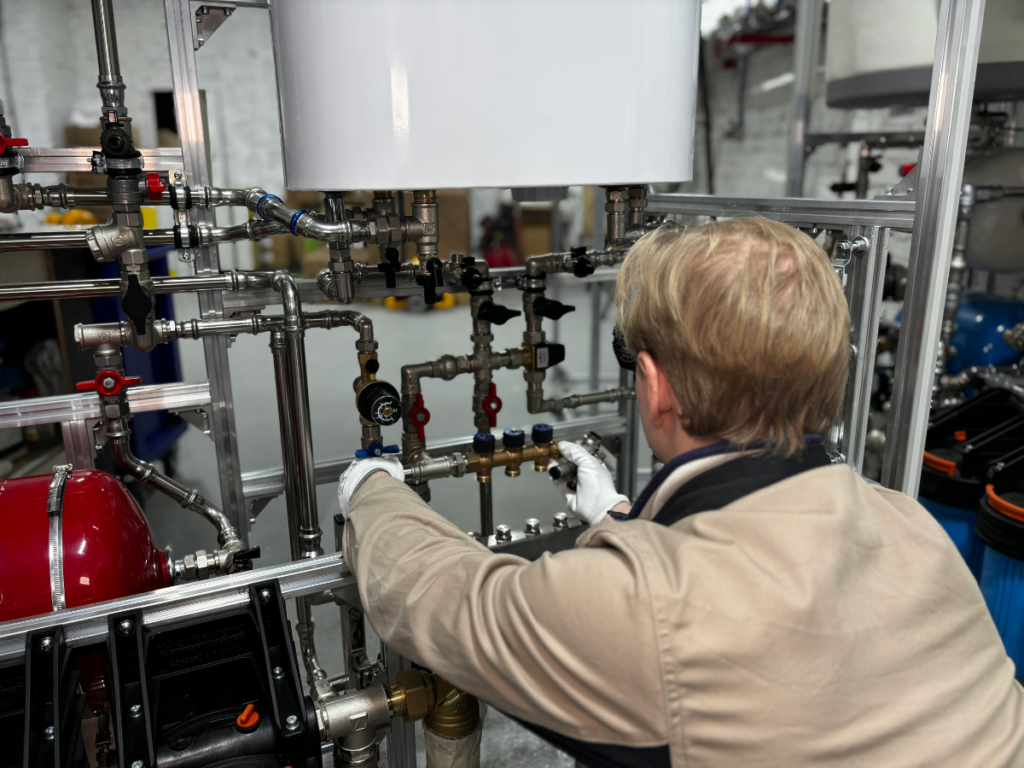
A pinhole leak is a very small opening that develops through the wall of a pipe, most commonly discussed in connection with copper plumbing.
The hole may be tiny, but because the water line remains pressurized, even a small perforation can release enough water to stain drywall, dampen cabinets, damage flooring, or create moisture problems around concealed piping.
Many pinhole leaks develop through localized pitting corrosion, which attacks a concentrated area rather than thinning the entire pipe evenly. That means one pinhole leak does not automatically indicate that every copper pipe in the house is deteriorating at the same rate.
How Do Pinhole Leaks Form in Copper Pipes?
Copper is generally durable, but corrosion can occur under certain conditions. Water chemistry, excessive flow velocity or turbulence, installation practices, aggressive soldering flux, and other factors can contribute to localized corrosion.
As a pit deepens, it can eventually penetrate the pipe wall. Finding the damaged spot is only the first step because the plumber may also need to determine what contributed to the failure and whether nearby pipe shows similar deterioration.
How Small Can a Pinhole Leak Be?
The opening can be small enough to resemble a needle puncture, although there is no single standard size that defines every pinhole leak. What makes the problem important is not simply the diameter of the hole but the fact that it has penetrated a pressurized water line.
A slow leak may initially produce only a damp patch, mineral deposits, or slight discoloration around the pipe. If the damaged section is hidden behind drywall, beneath flooring, or above a ceiling, homeowners may notice the secondary effects long before they see the actual pipe.
What Are the Early Signs of a Hidden Pinhole Leak?
Because these leaks are often concealed, the first warning signs can be subtle.
Possible clues include:
- Small water stains on ceilings or walls
- Damp or warped cabinet materials
- Musty odors near plumbing runs
- Unexplained moisture around exposed copper pipe
- Green, blue-green, or whitish deposits around a pipe
- A water meter that moves when fixtures are turned off
- An unexplained increase in water use
- Localized reductions in water pressure
Low pressure has many possible causes, so it should not be treated as proof of a leak. However, hidden leakage is one of the issues worth investigating when household water pressure drops unexpectedly.
Does One Pinhole Leak Mean the Whole House Needs Repiping?
Not necessarily. A single damaged section may be repairable if the surrounding plumbing remains in good condition.
The decision changes when leaks repeatedly appear in different areas, several sections show pitting, or the plumbing has broader material or condition problems.
Older homes may contain a mixture of copper, galvanized steel, and newer materials installed during different renovations, so evaluating plumbing problems in older homes can help put an isolated leak in a larger system context.
A plumber should evaluate both the immediate leak and accessible nearby piping. Replacing an entire system because of one tiny hole can be unnecessary, while repeatedly patching leaks in a system with widespread deterioration can be equally inefficient.
Can You Temporarily Patch a Pinhole Leak?
A temporary clamp or repair product may slow a small leak after the water supply has been shut off and the pipe depressurized. These measures should be treated as short-term damage control rather than permanent repairs.
The safer first response to an active leak is to shut off the affected water supply when possible and protect nearby materials from additional water exposure. A professional plumbing repair can then determine whether the damaged section should be repaired, replaced, or investigated as part of a larger corrosion problem.
Why Are Pinhole Leaks Easy to Miss?
The leak itself may be tiny, and much of a home’s supply piping is hidden inside walls, ceilings, floors, or cabinetry. Water can also travel along framing or pipe surfaces before becoming visible, which means the stain may not appear directly beneath the damaged spot.
That is why pinhole leaks are often discovered through their effects rather than by seeing water spray from a pipe. Catching the source early can limit water damage, but the more important question is whether the leak is an isolated defect or one sign of a broader plumbing condition that deserves further evaluation.
What Causes Pinhole Leaks in Copper Pipes?
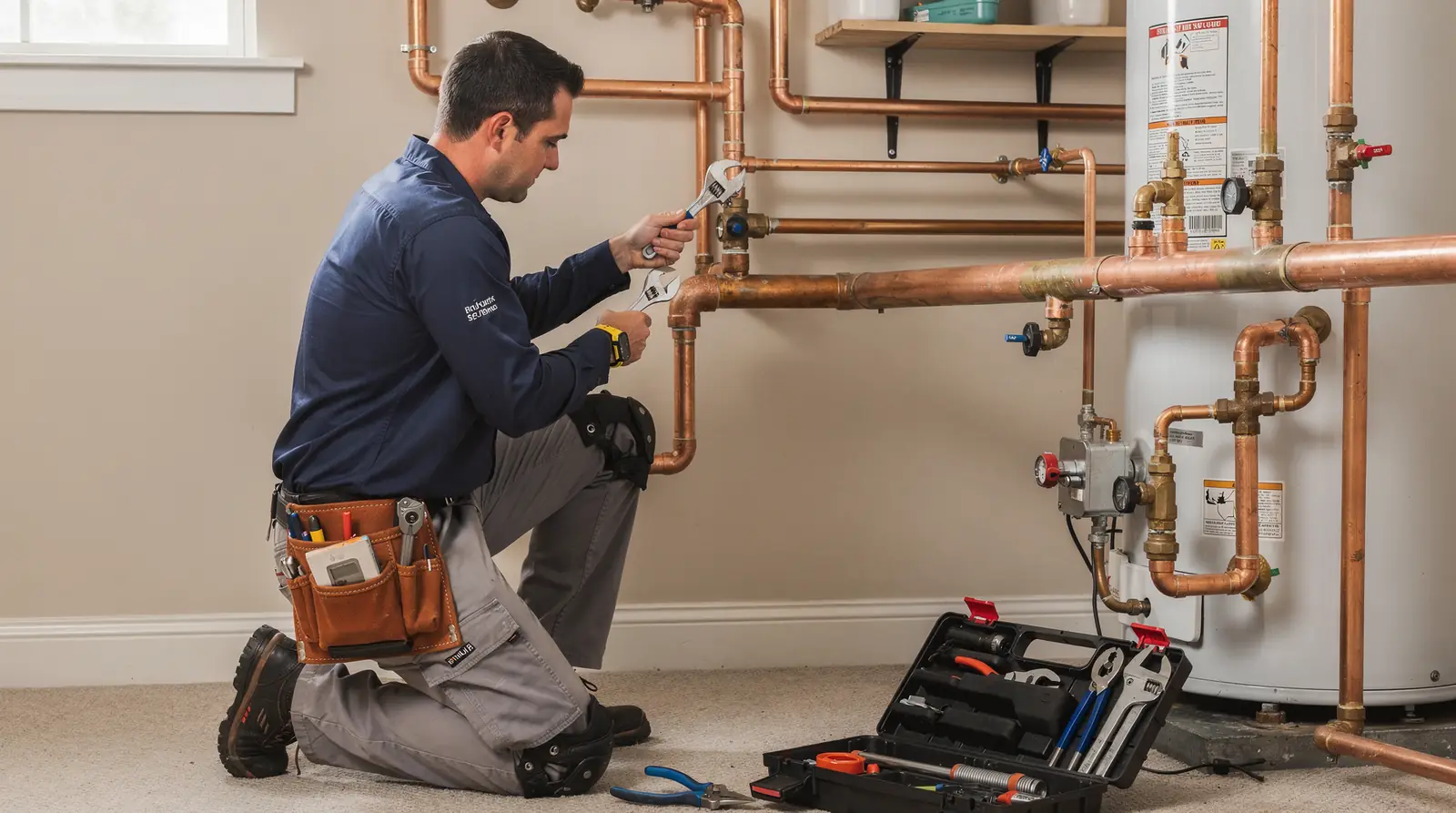
Pinhole leaks in copper pipes usually develop through localized corrosion rather than age alone. Water chemistry, flow conditions, installation quality, and plumbing design can all influence whether small pits form and eventually penetrate the pipe wall.
This is why copper systems of similar ages can perform very differently.
Does Water Quality Cause Pinhole Leaks?
Water chemistry can play an important role, but there is no single water-quality profile responsible for every copper pinhole leak.
EPA research on copper pitting has examined alkalinity, conductivity, dissolved oxygen, carbon dioxide, chlorides, sulfates, and pH because these variables can interact in ways that encourage localized corrosion.
Hard water should not automatically be blamed. Different types of copper corrosion can occur under different water conditions, so the actual chemistry needs to be evaluated rather than inferred from mineral deposits on fixtures.
Can High Water Velocity Damage Copper Pipe?
Yes. Excessive flow velocity and turbulence can contribute to erosion-corrosion, particularly at elbows, fittings, poorly prepared pipe ends, and other areas where water movement becomes turbulent.
Water pressure and velocity are related but not identical. A high pressure reading alone does not prove erosion-corrosion, so persistent pressure or flow problems should be evaluated as part of the larger plumbing system.
Can Installation Mistakes Cause Leaks Years Later?
They can. Excessive soldering flux, overheated joints, poorly deburred pipe ends, inadequate support, and layouts that create unnecessary turbulence can contribute to localized problems that appear years after installation.
Installation history becomes particularly relevant when corrosion repeatedly develops near fittings or sections modified during previous renovations.
Does Hard Water Cause Copper Pitting?
Hard water and mineral buildup are often blamed for almost every plumbing problem, but the relationship is more complicated. Mineral scale can restrict flow in some plumbing components, yet visible scale does not establish that hardness caused a pinhole leak.
JW Plumbing Pros notes that hard water can contribute to mineral buildup inside household plumbing and fixtures. That makes hard-water-related mineral buildup relevant to overall plumbing performance, but diagnosing copper corrosion requires looking beyond hardness alone.
Can Chlorine or Other Water-Treatment Chemicals Play a Role?
Water treatment conditions can influence corrosion behavior, although their effect depends on the complete water chemistry.
Homeowners should not attempt to alter municipal water chemistry because of one pinhole leak. If repeated failures raise concerns about water quality, laboratory testing and professional interpretation provide a stronger basis for deciding whether treatment is appropriate.
Why Do Pinhole Leaks Sometimes Keep Coming Back?
Repairing one hole stops the leak at that location but does not necessarily eliminate the condition that caused it. When the issue extends beyond one exposed section, water line leak repair and replacement may involve evaluating whether damaged piping can be repaired selectively or whether a larger portion of the system needs attention.
Can Pinhole Leaks Be Prevented?
Not every pinhole leak can be predicted or prevented. Proper pipe sizing, controlled flow velocity, good installation practices, appropriate water treatment when testing supports it, and periodic inspection of accessible copper can help reduce known risks.
For homes with repeated leaks, prevention starts with identifying the likely cause rather than continuing to patch individual failures.
When Is Water Testing Worth It After a Pinhole Leak?
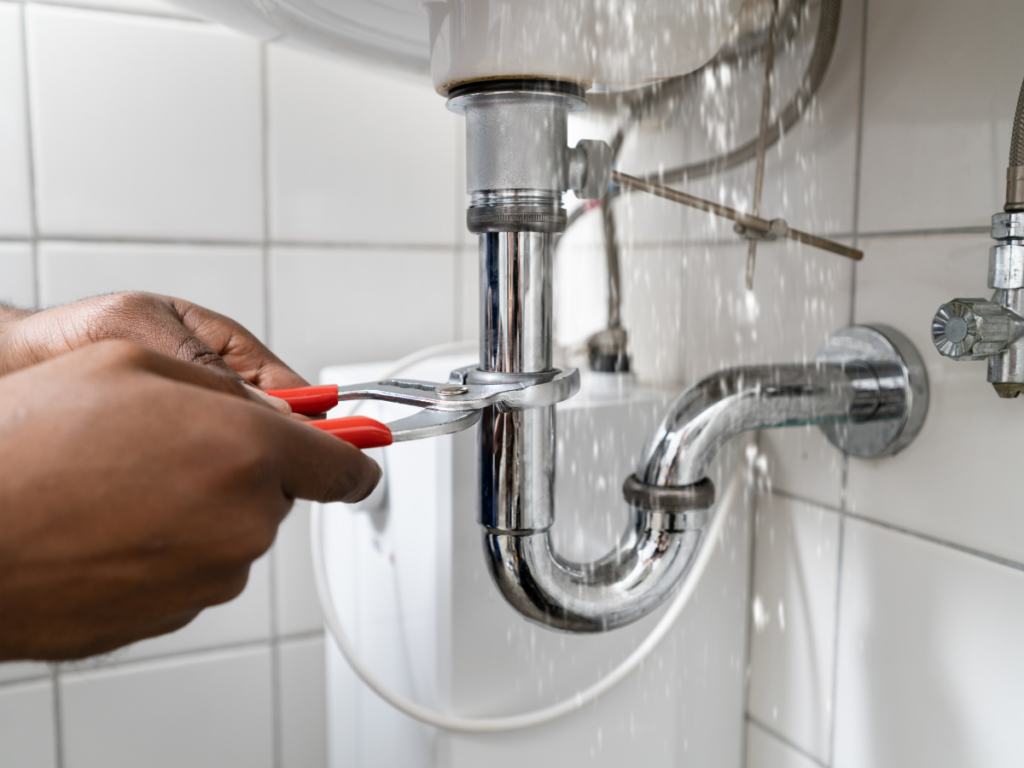
One pinhole leak does not automatically mean a home’s water chemistry is damaging the plumbing. Testing becomes more useful when repeated failures or visible corrosion suggest an ongoing condition that needs explanation.
What Can Water Testing Tell You?
Depending on the situation, water analysis may evaluate pH, alkalinity, hardness, chlorides, sulfates, dissolved solids, and other characteristics that influence how water interacts with copper.
No single result proves why a pipe developed a pit. Results should be considered alongside pipe condition, leak locations, water pressure, flow characteristics, and installation history.
Is a Home pH Test Enough?
A home test strip can provide a rough pH reading, but pH alone cannot diagnose pinhole leaks. If corrosion is serious enough to affect a repair or repiping decision, a more complete water analysis is more useful than relying on a single pH measurement.
Does Municipal Water Need to Be Tested?
Public water systems routinely monitor water for regulated drinking-water requirements. Homeowners can start by reviewing their utility’s water-quality report.
If repeated corrosion is occurring in a particular home, testing water at the property may provide additional information because pipe materials, installation, stagnation, temperature, and other conditions can influence how water interacts with the plumbing.
What About Homes With Private Wells?
Private-well owners have more responsibility for monitoring their water quality. If repeated pinhole leaks occur, testing can help determine whether water characteristics may be contributing to corrosion.
Treatment decisions should be based on actual results rather than assuming hardness, acidity, or another single factor is responsible.
Can Water Treatment Stop Pinhole Leaks?
Sometimes, if testing identifies a water-quality condition that requires treatment. It is not a universal solution.
Treatment will not correct failures caused primarily by poor workmanship, excessive velocity, damaged pipe, or unsuitable system design. A softener, neutralizer, filtration system, or other equipment should therefore address a documented problem rather than be installed solely because one pinhole leak appeared.
What Should Be Checked Alongside Water Chemistry?
A plumber evaluating recurring pinhole leaks should look at more than a laboratory report. Pipe condition, the location of failures, fittings, workmanship, water pressure, flow patterns, previous repairs, and whether corrosion is concentrated in one area can all help narrow the cause.
Patterns matter particularly when leaks repeatedly appear near fittings, bends, or sections altered during renovations. Those locations may point toward turbulence or installation factors rather than a whole-house chemistry problem.
When Does Water Testing Change the Repair Decision?
Testing is most valuable when its results could affect what happens next. For an isolated leak, repair and observation may be appropriate when surrounding plumbing appears sound.
With repeated failures, combining water analysis with a broader plumbing evaluation can help determine whether selective repair, water treatment, partial replacement, or broader repiping deserves consideration.
Why Can 10-Year-Old Copper Pipes Develop Pinhole Leaks?
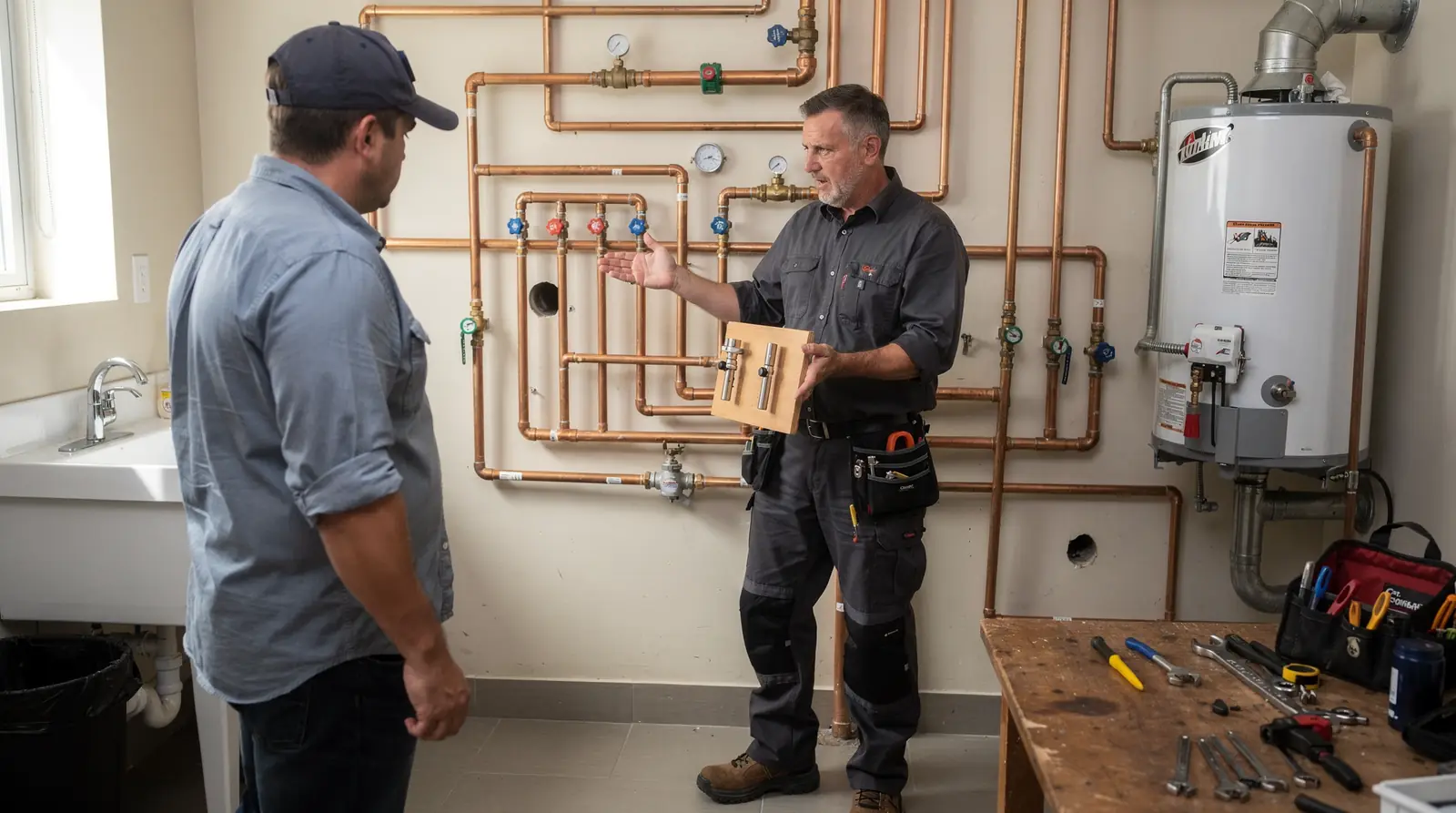
A pinhole leak after only 10 years may seem premature, but age alone does not determine how long copper plumbing will last.
Localized corrosion, excessive water velocity, installation problems, water chemistry, and other unfavorable conditions can cause an individual section to fail even when the plumbing system is relatively young.
Is 10 Years Too Soon for Copper Pipe to Fail?
Ten years would generally be considered premature for copper plumbing that is operating under suitable conditions. Copper pipes are not expected to reach a predictable expiration date at a specific age, however, so a relatively early leak does not by itself establish that the pipe was defective.
Localized corrosion can penetrate one small part of a pipe while much of the surrounding copper retains substantial wall thickness. This is one reason pinhole leaks can appear even when the plumbing does not otherwise look old or extensively deteriorated.
Does an Early Pinhole Leak Mean the Copper Was Poor Quality?
Not necessarily. Pipe material is only one part of the plumbing system. Water chemistry, flow conditions, residual soldering flux, poorly prepared pipe ends, and other installation factors can contribute to localized corrosion even when the tubing originally met appropriate specifications.
Should a 10-Year-Old Leak Be Treated Differently From One in Older Plumbing?
The immediate repair may be similar, but the diagnostic questions can be different. In a relatively young system, it makes sense to look more closely for an identifiable condition that could explain why failure occurred earlier than expected.
A plumber may inspect nearby copper for additional pitting or discoloration, consider where the failure occurred, and look for patterns around fittings, bends, soldered connections, or high-flow sections.
If multiple pinhole leaks have already occurred, the pattern becomes more significant than the age printed on the home’s plumbing history.
Does One Early Leak Mean More Are Coming?
No. One pinhole leak cannot reliably predict that the rest of the plumbing will soon fail. Repeated leaks in separate locations are more significant. Documenting where and when previous leaks occurred can help distinguish an isolated failure from a developing pattern.
What Should Be Evaluated After Premature Copper-Pipe Failure?
Depending on the circumstances, an evaluation may consider:
- The condition of accessible copper near the leak
- Previous pinhole leaks elsewhere
- Water pressure and flow characteristics
- Turbulence near fittings or changes in direction
- Installation quality around joints and pipe ends
- Water chemistry when repeated corrosion makes testing appropriate
- Previous plumbing modifications
The purpose is to determine whether the failure is isolated or whether repairing only the visible leak could leave an underlying problem unresolved.
When Does Premature Failure Point Toward Repiping?
A 10-year-old plumbing system should not be repiped simply because one pinhole leak appeared. Broader replacement becomes more worth evaluating when leaks recur in different locations, widespread pitting is visible, or testing identifies a condition affecting a larger portion of the copper system. The pattern of failure is ultimately more useful than pipe age alone.
Why Is the Leak Pattern More Useful Than Pipe Age?
Age provides context, but it does not explain the failure mechanism. Two copper systems installed in the same year can perform very differently because their water conditions, flow rates, workmanship, modifications, and operating environments are not identical.
For homeowners dealing with pinhole leaks in relatively new plumbing, that is the most useful takeaway. A premature leak deserves investigation, but it does not automatically mean the entire copper system is defective or approaching the end of its life.
How Much Damage Can a Hidden Pinhole Leak Cause?
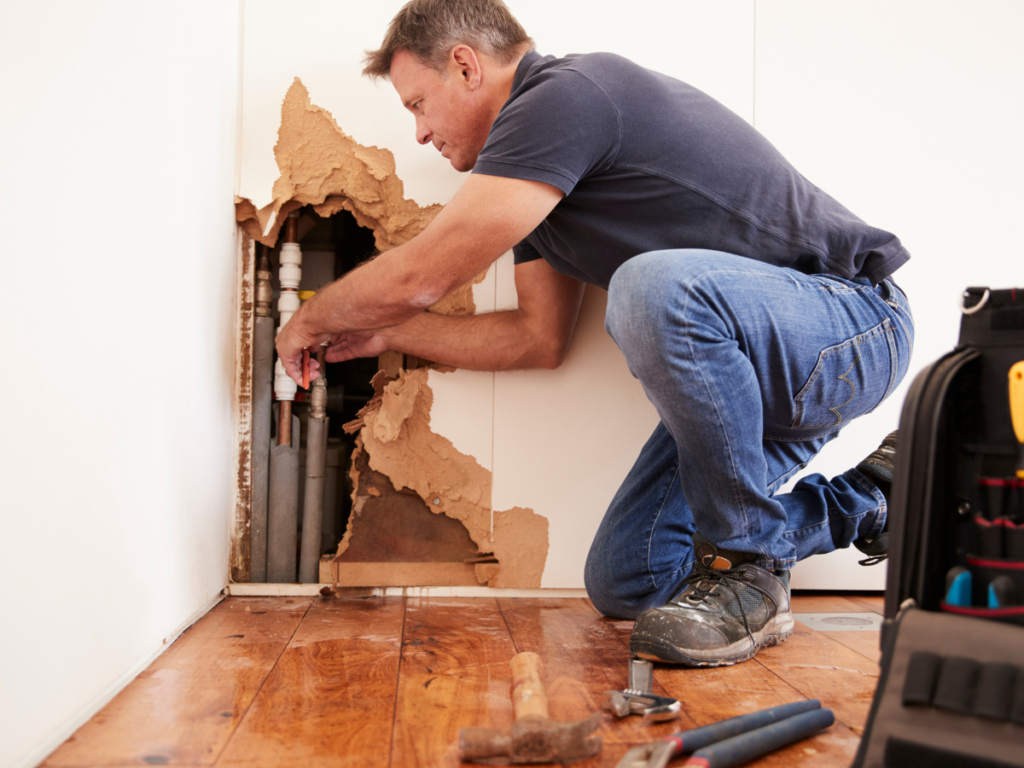
The amount of damage depends on where the leak occurs, how much water escapes, and how long surrounding materials remain wet.
Even a slow leak can affect drywall, insulation, cabinetry, flooring, and other absorbent materials. The plumbing repair itself may be relatively small while drying and restoring the surrounding area becomes the larger project.
Why Does a Slow Leak Cause So Much Trouble?
Building materials are not designed to remain continuously damp. Drywall can stain or soften, wood products can swell or warp, and insulation can retain hidden moisture. EPA recommends drying wet materials within about 24 to 48 hours after a leak or spill when possible to reduce the opportunity for mold growth.
Can Mold Develop From a Pinhole Leak?
Yes, if surrounding materials remain damp long enough. Mold is not inevitable, however. Prompt leak repair and thorough drying can limit the conditions that support growth.
Can a Small Leak Damage Wood or Flooring?
It can. Wood flooring, engineered products, trim, cabinet bases, and subfloor materials may swell, discolor, separate, or deteriorate after prolonged moisture exposure. Visible staining may not show the full extent of the moisture because water can spread behind finished surfaces.
Can a Hidden Leak Suddenly Become Worse?
There is no reliable timetable for how a pinhole leak will progress. The opening may remain small for a period or the damaged section may continue deteriorating. Active moisture should therefore be addressed promptly even when the drip rate appears minor.
What Should Be Done After the Pipe Is Fixed?
Stopping the leak is only part of the response. Wet building materials should be dried promptly, and materials that cannot be adequately dried or cleaned may need to be removed. The moisture source and resulting water damage should both be addressed rather than assuming the job is complete once the pipe stops leaking.
Should You Repair or Replace Copper Pipe After a Pinhole Leak?
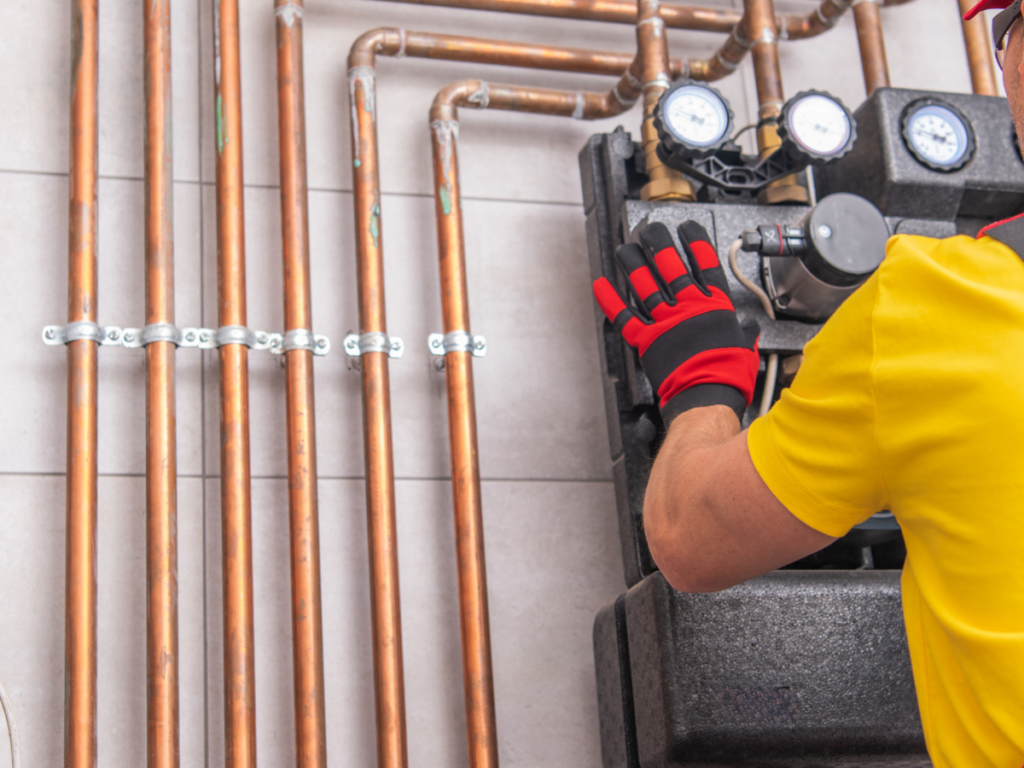
One pinhole leak does not automatically justify replacing an entire plumbing system. A localized repair may be appropriate when the failure is confined to one section, the surrounding copper appears sound, and there is no history suggesting that similar corrosion is occurring elsewhere.
Replacement becomes a more serious consideration when leaks recur in different locations or inspection reveals broader deterioration. The decision should be based on the pattern and condition of the plumbing rather than on a fixed rule such as “one leak means repair, three leaks mean repipe.”
What Does a Localized Repair Usually Involve?
For an isolated failure, a plumber may remove the damaged portion of pipe and install a new section using an appropriate connection method. The exact repair depends on pipe location, accessibility, surrounding materials, and the condition of the copper near the leak.
The surrounding pipe matters because attaching a repair to severely thinned or extensively pitted copper does not solve the larger problem. A sound repair therefore begins with determining where healthy material starts rather than replacing only the exact spot where water emerged.
When Should More of the System Be Evaluated?
Broader evaluation makes sense when pinhole leaks have occurred repeatedly, visible pitting appears in multiple areas, or failures are occurring in relatively young copper without an obvious isolated cause.
Those patterns can justify looking at water chemistry, pressure and velocity, installation history, and the condition of other accessible pipe runs.
This does not mean whole-home replacement is automatically necessary. The purpose of the evaluation is to determine whether the problem is local, limited to one branch, or distributed throughout a larger portion of the plumbing.
Is Pipe Age Enough to Decide?
No. Age can help provide context, but it should not be the deciding factor by itself. Older plumbing may have more accumulated wear, yet relatively young copper can experience premature localized corrosion under unfavorable conditions.
Conversely, an older copper system that remains in good condition should not be replaced simply because it has reached an arbitrary age.
When Does Replacement Become More Practical?
Replacement becomes easier to justify when homeowners are repeatedly paying to open walls, repair separate leaks, and restore water-damaged areas. At that point, comparing continued spot repairs with partial or broader repiping provides a more realistic picture of long-term cost and disruption.
The same applies when accessible pipe shows extensive pitting or thinning beyond the immediate leak. Replacing a larger section may reduce the chance of repeatedly repairing adjacent weak points, although the appropriate scope still depends on what the inspection finds.
What Questions Should You Ask Before Choosing?
A useful repair-versus-replacement discussion should answer several practical questions:
- Is this the first pinhole leak or one of several?
- Is corrosion limited to one location?
- What condition is the nearby copper in?
- Is there evidence of an underlying water, flow, or installation issue?
- How accessible is the damaged piping?
- Would repeated repairs require reopening the same finished areas?
- Is partial replacement sufficient, or is deterioration more widespread?
Those answers are more meaningful than a simple age threshold. They also help homeowners understand whether they are paying to solve one damaged pipe section or managing an ongoing condition that could produce additional pinhole leaks.
Conclusion
Pinhole leaks may be small, but they can lead to significant water damage when they develop unnoticed inside walls, ceilings, or other hidden areas.
Warning signs such as unexplained moisture, water stains, reduced water pressure, higher water bills, or corrosion on exposed pipes can indicate that your plumbing needs attention. Identifying the source early can help limit damage and determine whether a targeted repair or a more extensive plumbing solution is needed.
For professional leak detection and dependable plumbing repairs, choose JW Plumbing Pros. If you suspect a pinhole leak or have noticed unexplained signs of water damage, call 770-635-5159 to speak with the team at JW Plumbing Pros or fill out the online form to request your free quote today.